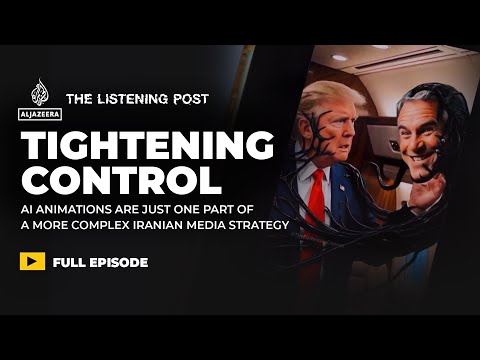
The information front has been central to the Iranian government’s war effort.
For an external audience, there is an innovative online strategy that has consisted of AI Lego, memes and hip hop diss tracks directed at Donald Trump and the MAGA base. But this coexists with more brutal domestic tactics: crackdowns, arrests and internet blackouts.
The result has been the Iranian authorities making use of the internet for PR internationally, while simultaneously preventing the Iranian people from openly accessing the net themselves.
Contributors:
Ali Hashem – Correspondent, Al Jazeera English
Mehran Kamrava – Professor of Government, Georgetown University in Qatar
Tara Kangarlou – Journalist & Author, The Heartbeat of Iran
Maral Karimi – Lecturer, Toronto Metropolitan University
On our radar
The killing of Lebanese journalist Amal Khalil unfolded in the manner that so many Israeli assassinations of journalists in Gaza have - minute by minute, hour by hour, in a pattern that has become shockingly familiar. There's the surveillance, the strike, the obstruction of rescue and then, the denial - Israel's insistence that it does not target journalists, medics or rescue workers.
Meenakshi Ravi reports.
Pakistan’s peacemaker moment and the missing stories
Pakistan has found itself at the centre of one of the world’s most consequential stories - by hosting talks between the United States and Iran, brokering ceasefires, earning the very public praise of Donald Trump and making headlines around the world.
But this PR moment is obscuring a great deal, including an undercover war with Afghanistan and a crushing cost-of-living crisis at home. We speak to Amber Rahim Shamsi about the domestic politics behind Pakistan’s diplomatic moment in the sun.
Featuring:
Amber Rahim Shamsi – Pakistan Editor, Nukta
The information front has been central to the Iranian government’s war effort.
For an external audience, there is an innovative online strategy that has consisted of AI Lego, memes and hip hop diss tracks directed at Donald Trump and the MAGA base. But this coexists with more brutal domestic tactics: crackdowns, arrests and internet blackouts.
The result has been the Iranian authorities making use of the internet for PR internationally, while simultaneously preventing the Iranian people from openly accessing the net themselves.
Contributors:
Ali Hashem – Correspondent, Al Jazeera English
Mehran Kamrava – Professor of Government, Georgetown University in Qatar
Tara Kangarlou – Journalist & Author, The Heartbeat of Iran
Maral Karimi – Lecturer, Toronto Metropolitan University
On our radar
The killing of Lebanese journalist Amal Khalil unfolded in the manner that so many Israeli assassinations of journalists in Gaza have - minute by minute, hour by hour, in a pattern that has become shockingly familiar. There's the surveillance, the strike, the obstruction of rescue and then, the denial - Israel's insistence that it does not target journalists, medics or rescue workers.
Meenakshi Ravi reports.
Pakistan’s peacemaker moment and the missing stories
Pakistan has found itself at the centre of one of the world’s most consequential stories - by hosting talks between the United States and Iran, brokering ceasefires, earning the very public praise of Donald Trump and making headlines around the world.
But this PR moment is obscuring a great deal, including an undercover war with Afghanistan and a crushing cost-of-living crisis at home. We speak to Amber Rahim Shamsi about the domestic politics behind Pakistan’s diplomatic moment in the sun.
Featuring:
Amber Rahim Shamsi – Pakistan Editor, Nukta
Iran’s FM Abbas Araghchi is in Islamabad for talks with Pakistani officials, as US envoys are also set to arrive in the capital. Tehran says no direct US talks are planned. Al Jazeera’s Kimberly Halkett explains what we know.
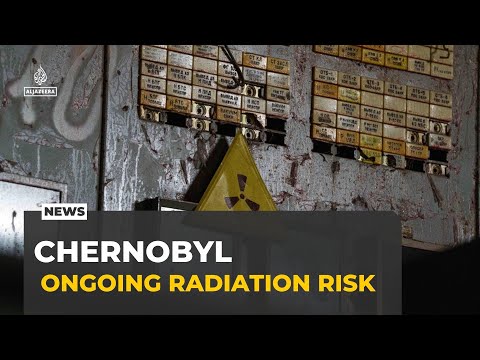
Forty years after the Chernobyl disaster, the site remains one of the most contaminated places on earth.
After a Russian drone strike damaged the protective shell over Reactor Number Four last year, concerns are growing about the condition of the site and the long term effort to keep it secure.
Al Jazeera’s Audrey Macalpine reports.
Subscribe to our channel: http://bit.ly/AJSubscribe
Follow us on X : https://twitter.com/AJEnglish
Find us on Facebook: https://www.facebook.com/aljazeera
Check our website: http://www.aljazeera.com/
Check out our Instagram page: https://www.instagram.com/aljazeeraenglish/
Download AJE Mobile App: https://aje.news/AJEMobile
Forty years after the Chernobyl disaster, the site remains one of the most contaminated places on earth.
After a Russian drone strike damaged the protective shell over Reactor Number Four last year, concerns are growing about the condition of the site and the long term effort to keep it secure.
Al Jazeera’s Audrey Macalpine reports.
Subscribe to our channel: http://bit.ly/AJSubscribe
Follow us on X : https://twitter.com/AJEnglish
Find us on Facebook: https://www.facebook.com/aljazeera
Check our website: http://www.aljazeera.com/
Check out our Instagram page: https://www.instagram.com/aljazeeraenglish/
Download AJE Mobile App: https://aje.news/AJEMobile
Ireland will demand that Israeli authorities repay the cost of a school that was demolished by settlers in the occupied West Bank. The Irish Aid-backed facility, which served around 60 children, was among structures destroyed in a Bedouin community.
In Gaza, where conflict has deeply affected children’s lives, sport is helping restore a sense of normalcy.
Through a 6-week UNICEF program, children are finding support to cope with trauma while gradually rebuilding their confidence and hope for the future.
Al Jazeera’s Hani Mahmoud reports.
Subscribe to our channel: http://bit.ly/AJSubscribe
Follow us on X : https://twitter.com/AJEnglish
Find us on Facebook: https://www.facebook.com/aljazeera
Check our website: http://www.aljazeera.com/
Check out our Instagram page: https://www.instagram.com/aljazeeraenglish/
Download AJE Mobile App: https://aje.news/AJEMobile
In Gaza, where conflict has deeply affected children’s lives, sport is helping restore a sense of normalcy.
Through a 6-week UNICEF program, children are finding support to cope with trauma while gradually rebuilding their confidence and hope for the future.
Al Jazeera’s Hani Mahmoud reports.
Subscribe to our channel: http://bit.ly/AJSubscribe
Follow us on X : https://twitter.com/AJEnglish
Find us on Facebook: https://www.facebook.com/aljazeera
Check our website: http://www.aljazeera.com/
Check out our Instagram page: https://www.instagram.com/aljazeeraenglish/
Download AJE Mobile App: https://aje.news/AJEMobile
Colombian President Gustavo Petro has become the first foreign leader to visit Venezuela since the US kidnapping of Nicolas Maduro in January. Petro and Venezuela’s acting president Delcy Rodriguez agreed on military and intelligence cooperation to combat “mafias” running drugs and human trafficking on their shared border.
Iran’s foreign minister is in Islamabad, with US envoys also on the way. Iranian officials deny they plan on holding talks with US delegates, but the visits have raised hopes the two sides can break the Strait of Hormuz deadlock with diplomacy.
North Korea is marking its military anniversary with a series of ballistic missile launches, demonstrating its growing military capabilities.
The tests come amid reports that the United States is redeploying military assets from the Korean Peninsula to the Middle East. While Washington denies moving key systems like THAAD, it has confirmed shifting other resources to respond to regional tensions involving Iran.
South Korea has condemned the launches as violations of United Nations resolutions. The International Atomic Energy Agency says there are signs North Korea is advancing its nuclear weapons programme.
Leader Kim Jong Un has overseen the latest drills, signalling defiance at a time of heightened global instability. In South Korea, public concern is rising over both North Korea’s actions and the potential reduction of US military presence.
President Lee Jae Myung has sought to reassure the public, saying South Korea’s military is fully capable of responding to any threat. The country continues to strengthen its own defence capabilities, including warships, drones and missile defence systems.
The shifting security landscape could accelerate plans for South Korea to take full wartime operational control of its forces from the United States, potentially ending a decades-long arrangement dating back to the Korean War.
The developments highlight growing uncertainty in the region as global tensions reshape military priorities.
Al Jazeera's Barnaby Lo reports from Seoul.
Subscribe to our channel: http://bit.ly/AJSubscribe
Follow us on X : https://twitter.com/AJEnglish
Find us on Facebook: https://www.facebook.com/aljazeera
Check our website: http://www.aljazeera.com/
Check out our Instagram page: https://www.instagram.com/aljazeeraenglish/
Download AJE Mobile App: https://aje.news/AJEMobile
North Korea is marking its military anniversary with a series of ballistic missile launches, demonstrating its growing military capabilities.
The tests come amid reports that the United States is redeploying military assets from the Korean Peninsula to the Middle East. While Washington denies moving key systems like THAAD, it has confirmed shifting other resources to respond to regional tensions involving Iran.
South Korea has condemned the launches as violations of United Nations resolutions. The International Atomic Energy Agency says there are signs North Korea is advancing its nuclear weapons programme.
Leader Kim Jong Un has overseen the latest drills, signalling defiance at a time of heightened global instability. In South Korea, public concern is rising over both North Korea’s actions and the potential reduction of US military presence.
President Lee Jae Myung has sought to reassure the public, saying South Korea’s military is fully capable of responding to any threat. The country continues to strengthen its own defence capabilities, including warships, drones and missile defence systems.
The shifting security landscape could accelerate plans for South Korea to take full wartime operational control of its forces from the United States, potentially ending a decades-long arrangement dating back to the Korean War.
The developments highlight growing uncertainty in the region as global tensions reshape military priorities.
Al Jazeera's Barnaby Lo reports from Seoul.
Subscribe to our channel: http://bit.ly/AJSubscribe
Follow us on X : https://twitter.com/AJEnglish
Find us on Facebook: https://www.facebook.com/aljazeera
Check our website: http://www.aljazeera.com/
Check out our Instagram page: https://www.instagram.com/aljazeeraenglish/
Download AJE Mobile App: https://aje.news/AJEMobile
Rising global diesel prices are squeezing industries across the United States. The conflict in the Middle East and disruptions to supply are driving fuel costs higher.
In Maryland, fishermen are starting the blue crab season under pressure. Watermen like CJ Canby depend on diesel to power their boats, but higher prices are cutting into already thin margins.
As fuel costs rise, so do expenses across the industry. From bait to shipping, every part of the supply chain is affected. Early catches are modest, meaning fishermen must work harder to make up for the added cost.
Along the Chesapeake Bay, uncertainty is shaping the season. Business owners like Luke McFadden say diesel is essential for both boats and delivery trucks, leaving little room to adapt.
While support for President Donald Trump remains strong in the region, many are hoping for an end to the conflict to bring fuel prices down.
For now, fishermen face a difficult season where success depends not only on the catch, but on global events beyond their control.
Al Jazeera's Heidi Zhou-Castro reports from Pasadena in Maryland.
Subscribe to our channel: http://bit.ly/AJSubscribe
Follow us on X : https://twitter.com/AJEnglish
Find us on Facebook: https://www.facebook.com/aljazeera
Check our website: http://www.aljazeera.com/
Check out our Instagram page: https://www.instagram.com/aljazeeraenglish/
Download AJE Mobile App: https://aje.news/AJEMobile
#FuelPrices #USNews #Economy #FishingIndustry #Maryland #ChesapeakeBay #OilPrices #Geopolitics #MiddleEast #WorldNews
Rising global diesel prices are squeezing industries across the United States. The conflict in the Middle East and disruptions to supply are driving fuel costs higher.
In Maryland, fishermen are starting the blue crab season under pressure. Watermen like CJ Canby depend on diesel to power their boats, but higher prices are cutting into already thin margins.
As fuel costs rise, so do expenses across the industry. From bait to shipping, every part of the supply chain is affected. Early catches are modest, meaning fishermen must work harder to make up for the added cost.
Along the Chesapeake Bay, uncertainty is shaping the season. Business owners like Luke McFadden say diesel is essential for both boats and delivery trucks, leaving little room to adapt.
While support for President Donald Trump remains strong in the region, many are hoping for an end to the conflict to bring fuel prices down.
For now, fishermen face a difficult season where success depends not only on the catch, but on global events beyond their control.
Al Jazeera's Heidi Zhou-Castro reports from Pasadena in Maryland.
Subscribe to our channel: http://bit.ly/AJSubscribe
Follow us on X : https://twitter.com/AJEnglish
Find us on Facebook: https://www.facebook.com/aljazeera
Check our website: http://www.aljazeera.com/
Check out our Instagram page: https://www.instagram.com/aljazeeraenglish/
Download AJE Mobile App: https://aje.news/AJEMobile
#FuelPrices #USNews #Economy #FishingIndustry #Maryland #ChesapeakeBay #OilPrices #Geopolitics #MiddleEast #WorldNews
Israeli forces have killed 12 Palestinians, including six police officers, in multiple attacks across Gaza. Despite a six-month long ceasefire, Israeli forces are committing daily violations that have killed almost 1,000 people.
A meeting months in the making. Colombian President Gustavo Petro and Venezuelan interim leader Delcy Rodríguez have met in Caracas in a significant step toward rebuilding ties.
The visit marks the first by a foreign leader since Nicolás Maduro was removed earlier this year, offering Rodríguez an opportunity to strengthen her position and international legitimacy.
For Petro, the urgency lies along the shared border. Tens of thousands have been displaced in regions like Catatumbo, where armed groups and drug trafficking networks remain active.
Both leaders are seeking closer cooperation on security, including intelligence sharing and potential joint military efforts to tackle criminal groups operating across the border.
At the same time, pressure from Washington is shaping the political landscape. United States President Donald Trump has signalled expectations for change in Venezuela while also criticising Colombia’s handling of drug trafficking.
Despite past tensions, the two countries are looking to reset relations built on deep historical, economic and cultural ties. With more than 2,000 kilometres of shared border, cooperation is seen as essential for stability.
The meeting highlights a broader shift in regional diplomacy, where necessity is driving renewed engagement between neighbours facing shared challenges.
Subscribe to our channel: http://bit.ly/AJSubscribe
Follow us on X : https://twitter.com/AJEnglish
Find us on Facebook: https://www.facebook.com/aljazeera
Check our website: http://www.aljazeera.com/
Check out our Instagram page: https://www.instagram.com/aljazeeraenglish/
Download AJE Mobile App: https://aje.news/AJEMobile
A meeting months in the making. Colombian President Gustavo Petro and Venezuelan interim leader Delcy Rodríguez have met in Caracas in a significant step toward rebuilding ties.
The visit marks the first by a foreign leader since Nicolás Maduro was removed earlier this year, offering Rodríguez an opportunity to strengthen her position and international legitimacy.
For Petro, the urgency lies along the shared border. Tens of thousands have been displaced in regions like Catatumbo, where armed groups and drug trafficking networks remain active.
Both leaders are seeking closer cooperation on security, including intelligence sharing and potential joint military efforts to tackle criminal groups operating across the border.
At the same time, pressure from Washington is shaping the political landscape. United States President Donald Trump has signalled expectations for change in Venezuela while also criticising Colombia’s handling of drug trafficking.
Despite past tensions, the two countries are looking to reset relations built on deep historical, economic and cultural ties. With more than 2,000 kilometres of shared border, cooperation is seen as essential for stability.
The meeting highlights a broader shift in regional diplomacy, where necessity is driving renewed engagement between neighbours facing shared challenges.
Subscribe to our channel: http://bit.ly/AJSubscribe
Follow us on X : https://twitter.com/AJEnglish
Find us on Facebook: https://www.facebook.com/aljazeera
Check our website: http://www.aljazeera.com/
Check out our Instagram page: https://www.instagram.com/aljazeeraenglish/
Download AJE Mobile App: https://aje.news/AJEMobile
Soaring food costs and international sanctions are worsening the hunger crisis in Yemen, where 80 percent of the population already live below the poverty line. Yousef Marwry explains how Yemeni’s are dealing with the crisis.
A United States Army Special Forces Master Sergeant involved in planning an operation targeting Venezuelan President Nicolás Maduro is now under arrest.
Prosecutors say the 38-year-old used insider knowledge to place bets on a prediction market, earning around $400,000. The case is raising serious concerns about insider trading and the use of classified information for personal gain.
Prediction markets allow users to wager on real-world outcomes, from political events to global conflicts. They operate in a complex legal environment, regulated federally by the Commodity Futures Trading Commission, while several states argue they resemble unlicensed gambling and are seeking to restrict them.
Subscribe to our channel: http://bit.ly/AJSubscribe
Follow us on X : https://twitter.com/AJEnglish
Find us on Facebook: https://www.facebook.com/aljazeera
Check our website: http://www.aljazeera.com/
Check out our Instagram page: https://www.instagram.com/aljazeeraenglish/
Download AJE Mobile App: https://aje.news/AJEMobile
A United States Army Special Forces Master Sergeant involved in planning an operation targeting Venezuelan President Nicolás Maduro is now under arrest.
Prosecutors say the 38-year-old used insider knowledge to place bets on a prediction market, earning around $400,000. The case is raising serious concerns about insider trading and the use of classified information for personal gain.
Prediction markets allow users to wager on real-world outcomes, from political events to global conflicts. They operate in a complex legal environment, regulated federally by the Commodity Futures Trading Commission, while several states argue they resemble unlicensed gambling and are seeking to restrict them.
Subscribe to our channel: http://bit.ly/AJSubscribe
Follow us on X : https://twitter.com/AJEnglish
Find us on Facebook: https://www.facebook.com/aljazeera
Check our website: http://www.aljazeera.com/
Check out our Instagram page: https://www.instagram.com/aljazeeraenglish/
Download AJE Mobile App: https://aje.news/AJEMobile
This is one of the helicopters operated by the East Anglian Air Ambulance. Equipped with hospital-grade equipment and expert clinicians, these aircraft respond to some of the most critical emergencies across the United Kingdom.
Air ambulances operate as charities and rely heavily on public donations. They are not part of the National Health Service, although they work closely alongside it to deliver urgent care.
Rising fuel costs, triggered in part by global tensions including the conflict involving Iran, are now putting pressure on operations. Even small increases in fuel prices can have serious consequences for these lifesaving services.
Operators warn that the bigger concern is not just cost but supply. Any disruption affecting UK airports could limit their ability to respond to emergencies. Some airlines are already cutting flights, raising fears about wider fuel shortages.
Air ambulance services are calling on the government to prioritise fuel access in the event of shortages or rationing. They say uninterrupted supply is critical to ensure patients continue receiving urgent care when they need it most.
Often described as bringing a hospital directly to the patient, these services run around the clock every day of the year. Industry representatives have now written to MPs urging action to safeguard their operations.
Al Jazeera's Milene Veselinovic reports from London
Subscribe to our channel: http://bit.ly/AJSubscribe
Follow us on X : https://twitter.com/AJEnglish
Find us on Facebook: https://www.facebook.com/aljazeera
Check our website: http://www.aljazeera.com/
Check out our Instagram page: https://www.instagram.com/aljazeeraenglish/
Download AJE Mobile App: https://aje.news/AJEMobile
This is one of the helicopters operated by the East Anglian Air Ambulance. Equipped with hospital-grade equipment and expert clinicians, these aircraft respond to some of the most critical emergencies across the United Kingdom.
Air ambulances operate as charities and rely heavily on public donations. They are not part of the National Health Service, although they work closely alongside it to deliver urgent care.
Rising fuel costs, triggered in part by global tensions including the conflict involving Iran, are now putting pressure on operations. Even small increases in fuel prices can have serious consequences for these lifesaving services.
Operators warn that the bigger concern is not just cost but supply. Any disruption affecting UK airports could limit their ability to respond to emergencies. Some airlines are already cutting flights, raising fears about wider fuel shortages.
Air ambulance services are calling on the government to prioritise fuel access in the event of shortages or rationing. They say uninterrupted supply is critical to ensure patients continue receiving urgent care when they need it most.
Often described as bringing a hospital directly to the patient, these services run around the clock every day of the year. Industry representatives have now written to MPs urging action to safeguard their operations.
Al Jazeera's Milene Veselinovic reports from London
Subscribe to our channel: http://bit.ly/AJSubscribe
Follow us on X : https://twitter.com/AJEnglish
Find us on Facebook: https://www.facebook.com/aljazeera
Check our website: http://www.aljazeera.com/
Check out our Instagram page: https://www.instagram.com/aljazeeraenglish/
Download AJE Mobile App: https://aje.news/AJEMobile
Iran’s Foreign Minister Abbas Araghchi is in Islamabad as Pakistan attempts to revive negotiations between Tehran and Washington. The United States is sending envoys Steve Witkoff and Jared Kushner for what the White House describes as exploratory talks, with President Donald Trump signalling willingness to give diplomacy a chance.
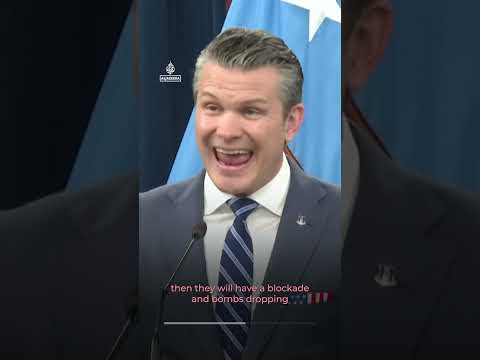
At the same time, pressure is intensifying. Defense Secretary Pete Hegseth confirmed the expansion of a US-backed blockade targeting Iranian-linked shipping worldwide, alongside the deployment of a third aircraft carrier group to the region.
Washington says enforcement now applies globally, with vessels seized in the Indo-Pacific and monitoring extended to ships moving to or from Iranian territory. The talks in Islamabad differ from previous failed efforts, with Vice President JD Vance remaining in Washington unless progress leads to more substantive negotiations alongside Secretary of State Marco Rubio.
Subscribe to our channel: http://bit.ly/AJSubscribe
Follow us on Twitter: https://twitter.com/AJEnglish
Find us on Facebook: https://www.facebook.com/aljazeera
Check our website: http://www.aljazeera.com/
Check out our Instagram page: https://www.instagram.com/aljazeeraenglish/
Download AJE Mobile App: https://aje.io/AJEMobile
Iran’s Foreign Minister Abbas Araghchi is in Islamabad as Pakistan attempts to revive negotiations between Tehran and Washington. The United States is sending envoys Steve Witkoff and Jared Kushner for what the White House describes as exploratory talks, with President Donald Trump signalling willingness to give diplomacy a chance.
At the same time, pressure is intensifying. Defense Secretary Pete Hegseth confirmed the expansion of a US-backed blockade targeting Iranian-linked shipping worldwide, alongside the deployment of a third aircraft carrier group to the region.
Washington says enforcement now applies globally, with vessels seized in the Indo-Pacific and monitoring extended to ships moving to or from Iranian territory. The talks in Islamabad differ from previous failed efforts, with Vice President JD Vance remaining in Washington unless progress leads to more substantive negotiations alongside Secretary of State Marco Rubio.
Subscribe to our channel: http://bit.ly/AJSubscribe
Follow us on Twitter: https://twitter.com/AJEnglish
Find us on Facebook: https://www.facebook.com/aljazeera
Check our website: http://www.aljazeera.com/
Check out our Instagram page: https://www.instagram.com/aljazeeraenglish/
Download AJE Mobile App: https://aje.io/AJEMobile
Another day into this extended ceasefire and there are signs of movement from the United States. The President has decided to dispatch special envoys Steve Witkoff and Jared Kushner back to Islamabad.
Iran has signalled it wants direct talks. The White House says the President remains willing to give diplomacy a chance. The envoys are expected to meet officials in Pakistan to assess whether progress can be made.
At the same time, military pressure is intensifying. The Defense Secretary confirmed a stronger blockade of Iranian ports and vessels, alongside the deployment of a third aircraft carrier group to the region — the first time in more than two decades.
US officials say enforcement has gone global, with Iranian-linked ships seized in the Indo-Pacific. The blockade now targets vessels of any nationality moving to or from Iranian territory.
The upcoming talks in Islamabad differ from previous failed efforts. Vice President JD Vance will remain in Washington, while Secretary of State Marco Rubio may join negotiations if early discussions show meaningful progress.
The developments highlight a dual strategy — pressure and diplomacy — as Washington tests whether engagement with Iran can produce results.
AL Jazeera's Mike Hanna reports
Subscribe to our channel: http://bit.ly/AJSubscribe
Follow us on X : https://twitter.com/AJEnglish
Find us on Facebook: https://www.facebook.com/aljazeera
Check our website: http://www.aljazeera.com/
Check out our Instagram page: https://www.instagram.com/aljazeeraenglish/
Download AJE Mobile App: https://aje.news/AJEMobile
Another day into this extended ceasefire and there are signs of movement from the United States. The President has decided to dispatch special envoys Steve Witkoff and Jared Kushner back to Islamabad.
Iran has signalled it wants direct talks. The White House says the President remains willing to give diplomacy a chance. The envoys are expected to meet officials in Pakistan to assess whether progress can be made.
At the same time, military pressure is intensifying. The Defense Secretary confirmed a stronger blockade of Iranian ports and vessels, alongside the deployment of a third aircraft carrier group to the region — the first time in more than two decades.
US officials say enforcement has gone global, with Iranian-linked ships seized in the Indo-Pacific. The blockade now targets vessels of any nationality moving to or from Iranian territory.
The upcoming talks in Islamabad differ from previous failed efforts. Vice President JD Vance will remain in Washington, while Secretary of State Marco Rubio may join negotiations if early discussions show meaningful progress.
The developments highlight a dual strategy — pressure and diplomacy — as Washington tests whether engagement with Iran can produce results.
AL Jazeera's Mike Hanna reports
Subscribe to our channel: http://bit.ly/AJSubscribe
Follow us on X : https://twitter.com/AJEnglish
Find us on Facebook: https://www.facebook.com/aljazeera
Check our website: http://www.aljazeera.com/
Check out our Instagram page: https://www.instagram.com/aljazeeraenglish/
Download AJE Mobile App: https://aje.news/AJEMobile
European leaders are good at talks. Conferences and summits are the EU’s lifeblood. But high-level dialogue does not equal relevance — something the EU is struggling with.
Beset by a global crisis, the EU wants distance from a deeply unpopular war, but still contributes something. The Strait of Hormuz has to be open without any tolls, and efforts are being made to ensure that. Existing missions in the region could be expanded to quickly form coalitions.
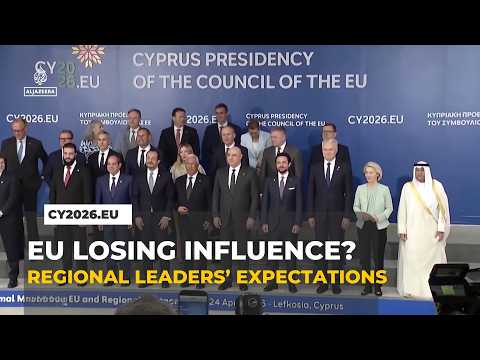
Invited to talks in Cyprus were leaders from Egypt, Syria, Lebanon, and the Gulf, aiming to forge closer ties and tackle shared challenges. The EU is trying to remain a relevant diplomatic actor in the Middle East, a region in turmoil at a time when Europe’s power and voice are increasingly in question.
Their presence suggests Europe still has something to offer. Syria seeks a return to the international fold. Lebanon looks for support amid ongoing Israeli attacks. But from across the Atlantic, criticism has been dismissive of these efforts.
Even the summit’s framing — described as informal with no binding outcomes — reinforces doubts about whether Europe can move beyond rhetoric.
Subscribe to our channel: http://bit.ly/AJSubscribe
Follow us on X : https://twitter.com/AJEnglish
Find us on Facebook: https://www.facebook.com/aljazeera
Check our website: http://www.aljazeera.com/
Check out our Instagram page: https://www.instagram.com/aljazeeraenglish/
Download AJE Mobile App: https://aje.news/AJEMobile
European leaders are good at talks. Conferences and summits are the EU’s lifeblood. But high-level dialogue does not equal relevance — something the EU is struggling with.
Beset by a global crisis, the EU wants distance from a deeply unpopular war, but still contributes something. The Strait of Hormuz has to be open without any tolls, and efforts are being made to ensure that. Existing missions in the region could be expanded to quickly form coalitions.
Invited to talks in Cyprus were leaders from Egypt, Syria, Lebanon, and the Gulf, aiming to forge closer ties and tackle shared challenges. The EU is trying to remain a relevant diplomatic actor in the Middle East, a region in turmoil at a time when Europe’s power and voice are increasingly in question.
Their presence suggests Europe still has something to offer. Syria seeks a return to the international fold. Lebanon looks for support amid ongoing Israeli attacks. But from across the Atlantic, criticism has been dismissive of these efforts.
Even the summit’s framing — described as informal with no binding outcomes — reinforces doubts about whether Europe can move beyond rhetoric.
Subscribe to our channel: http://bit.ly/AJSubscribe
Follow us on X : https://twitter.com/AJEnglish
Find us on Facebook: https://www.facebook.com/aljazeera
Check our website: http://www.aljazeera.com/
Check out our Instagram page: https://www.instagram.com/aljazeeraenglish/
Download AJE Mobile App: https://aje.news/AJEMobile
Iranian Foreign Minister Abbas Araghchi has arrived in Pakistan as part of a broader regional tour, Iranian state media says, amid uncertainty over stalled US ceasefire talks. Pakistan says no meeting with US envoys is planned, while Washington says its negotiators will travel to Islamabad.
Some of Somalia's most vulnerable children are at risk of losing their opportunity for an education. Drought and ongoing conflict in Somalia have pushed many school-age children out of classrooms, with numerous schools forced to shut down. In displacement camps, children are trying to continue their education, but reduced aid funding is severely disrupting learning programmes.
Al Jazeera’s Catherine Soi reports from Kismayo in the south.
Subscribe to our channel: http://bit.ly/AJSubscribe
Follow us on Twitter: https://twitter.com/AJEnglish
Find us on Facebook: https://www.facebook.com/aljazeera
Check our website: http://www.aljazeera.com/
Check out our Instagram page: https://www.instagram.com/aljazeeraenglish/
Download AJE Mobile App: https://aje.io/AJEMobile
Some of Somalia's most vulnerable children are at risk of losing their opportunity for an education. Drought and ongoing conflict in Somalia have pushed many school-age children out of classrooms, with numerous schools forced to shut down. In displacement camps, children are trying to continue their education, but reduced aid funding is severely disrupting learning programmes.
Al Jazeera’s Catherine Soi reports from Kismayo in the south.
Subscribe to our channel: http://bit.ly/AJSubscribe
Follow us on Twitter: https://twitter.com/AJEnglish
Find us on Facebook: https://www.facebook.com/aljazeera
Check our website: http://www.aljazeera.com/
Check out our Instagram page: https://www.instagram.com/aljazeeraenglish/
Download AJE Mobile App: https://aje.io/AJEMobile
This episode of This Is America looks at Donald Trump’s plan to get his hands on what he calls Iran’s “nuclear dust” – and the huge risks that come with it. Reporting from Three Mile Island in Pennsylvania, we examine why Iran’s 60%-enriched uranium stockpile matters so much to Washington, and why Trump insists it must be removed “one way or another”. We break down the science behind enriched uranium and what “nuclear dust” really is, the military challenges of locating and seizing roughly 440kg of highly enriched material buried in bombed sites like Isfahan and Fordow, and the scale of any ground operation needed to dig it out and fly it to the US. Our guests explain why such a raid could take weeks, require thousands of troops under fire, and still fail to capture all the material – and why, despite Trump’s rhetoric, many experts argue that negotiated downblending under IAEA supervision is the only realistic path to reduce the threat.
Subscribe to our channel: http://bit.ly/AJSubscribe
Follow us on Twitter: https://twitter.com/AJEnglish
Find us on Facebook: https://www.facebook.com/aljazeera
Check our website: http://www.aljazeera.com/
Check out our Instagram page: https://www.instagram.com/aljazeeraenglish/
Download AJE Mobile App: https://aje.io/AJEMobile
This episode of This Is America looks at Donald Trump’s plan to get his hands on what he calls Iran’s “nuclear dust” – and the huge risks that come with it. Reporting from Three Mile Island in Pennsylvania, we examine why Iran’s 60%-enriched uranium stockpile matters so much to Washington, and why Trump insists it must be removed “one way or another”. We break down the science behind enriched uranium and what “nuclear dust” really is, the military challenges of locating and seizing roughly 440kg of highly enriched material buried in bombed sites like Isfahan and Fordow, and the scale of any ground operation needed to dig it out and fly it to the US. Our guests explain why such a raid could take weeks, require thousands of troops under fire, and still fail to capture all the material – and why, despite Trump’s rhetoric, many experts argue that negotiated downblending under IAEA supervision is the only realistic path to reduce the threat.
Subscribe to our channel: http://bit.ly/AJSubscribe
Follow us on Twitter: https://twitter.com/AJEnglish
Find us on Facebook: https://www.facebook.com/aljazeera
Check our website: http://www.aljazeera.com/
Check out our Instagram page: https://www.instagram.com/aljazeeraenglish/
Download AJE Mobile App: https://aje.io/AJEMobile
At the petrol pumps in the United States, petrol prices have just crossed $4 a gallon.
In Europe, some factories are facing energy rationing, and the impact of the supply crunch is being felt across major emerging economies.
It all points back to one crisis – in just 50 days, the US-Israel war on Iran has wiped out $50bn worth of oil production.
Analysts say that is equal to almost the entire economy of nations such as Estonia and Latvia.
The International Energy Agency says it is the largest energy crisis in history. But while no country will be spared, the burden will not be shared equally.
Subscribe to our channel: http://bit.ly/AJSubscribe
Follow us on X : https://twitter.com/AJEnglish
Find us on Facebook: https://www.facebook.com/aljazeera
Check our website: http://www.aljazeera.com/
Check out our Instagram page: https://www.instagram.com/aljazeeraenglish/
Download AJE Mobile App: https://aje.news/AJEMobile
At the petrol pumps in the United States, petrol prices have just crossed $4 a gallon.
In Europe, some factories are facing energy rationing, and the impact of the supply crunch is being felt across major emerging economies.
It all points back to one crisis – in just 50 days, the US-Israel war on Iran has wiped out $50bn worth of oil production.
Analysts say that is equal to almost the entire economy of nations such as Estonia and Latvia.
The International Energy Agency says it is the largest energy crisis in history. But while no country will be spared, the burden will not be shared equally.
Subscribe to our channel: http://bit.ly/AJSubscribe
Follow us on X : https://twitter.com/AJEnglish
Find us on Facebook: https://www.facebook.com/aljazeera
Check our website: http://www.aljazeera.com/
Check out our Instagram page: https://www.instagram.com/aljazeeraenglish/
Download AJE Mobile App: https://aje.news/AJEMobile
More than 1.2 million Lebanese have been forced from their homes since the start of March. Since the ceasefire came into effect, some have decided to return; others are unable to because their villages are occupied, under fire, or destroyed by Israel’s army.
Al Jazeera’s Malcolm Webb spoke to displaced people sheltering in a university in the city of Sidon in southern Lebanon.
Subscribe to our channel: http://bit.ly/AJSubscribe
Follow us on Twitter: https://twitter.com/AJEnglish
Find us on Facebook: https://www.facebook.com/aljazeera
Check our website: http://www.aljazeera.com/
Check out our Instagram page: https://www.instagram.com/aljazeeraenglish/
Download AJE Mobile App: https://aje.io/AJEMobile
More than 1.2 million Lebanese have been forced from their homes since the start of March. Since the ceasefire came into effect, some have decided to return; others are unable to because their villages are occupied, under fire, or destroyed by Israel’s army.
Al Jazeera’s Malcolm Webb spoke to displaced people sheltering in a university in the city of Sidon in southern Lebanon.
Subscribe to our channel: http://bit.ly/AJSubscribe
Follow us on Twitter: https://twitter.com/AJEnglish
Find us on Facebook: https://www.facebook.com/aljazeera
Check our website: http://www.aljazeera.com/
Check out our Instagram page: https://www.instagram.com/aljazeeraenglish/
Download AJE Mobile App: https://aje.io/AJEMobile
US President Donald Trump is sending a team of special envoys to Pakistan for talks with Iran. White House Press Secretary Karoline Leavitt said Steve Witkoff and Jared Kushner are heading to Islamabad. Iran’s Foreign Minister Abbas Aragchi was due in Pakistan on Friday.
In communities around Goma in eastern DRC, families—especially children and pregnant women—are facing severe malnutrition. The World Food Programme is providing vital support, but limited resources are making it difficult to meet the growing needs.
Al Jazeera’s Alain Uaykani reports from the regional capital Goma.
Subscribe to our channel: http://bit.ly/AJSubscribe
Follow us on Twitter: https://twitter.com/AJEnglish
Find us on Facebook: https://www.facebook.com/aljazeera
Check our website: http://www.aljazeera.com/
Check out our Instagram page: https://www.instagram.com/aljazeeraenglish/
Download AJE Mobile App: https://aje.io/AJEMobile
In communities around Goma in eastern DRC, families—especially children and pregnant women—are facing severe malnutrition. The World Food Programme is providing vital support, but limited resources are making it difficult to meet the growing needs.
Al Jazeera’s Alain Uaykani reports from the regional capital Goma.
Subscribe to our channel: http://bit.ly/AJSubscribe
Follow us on Twitter: https://twitter.com/AJEnglish
Find us on Facebook: https://www.facebook.com/aljazeera
Check our website: http://www.aljazeera.com/
Check out our Instagram page: https://www.instagram.com/aljazeeraenglish/
Download AJE Mobile App: https://aje.io/AJEMobile
US President Donald Trump’s special envoy Steve Witkoff and son-in-law Jared Kushner will travel to Pakistan on Saturday morning for talks with Iran, White House Press Secretary Karoline Leavitt has told a press briefing.
Subscribe to our channel: http://bit.ly/AJSubscribe
Follow us on Twitter: https://twitter.com/AJEnglish
Find us on Facebook: https://www.facebook.com/aljazeera
Check our website: http://www.aljazeera.com/
Check out our Instagram page: https://www.instagram.com/aljazeeraenglish/
Download AJE Mobile App: https://aje.io/AJEMobile
US President Donald Trump’s special envoy Steve Witkoff and son-in-law Jared Kushner will travel to Pakistan on Saturday morning for talks with Iran, White House Press Secretary Karoline Leavitt has told a press briefing.
Subscribe to our channel: http://bit.ly/AJSubscribe
Follow us on Twitter: https://twitter.com/AJEnglish
Find us on Facebook: https://www.facebook.com/aljazeera
Check our website: http://www.aljazeera.com/
Check out our Instagram page: https://www.instagram.com/aljazeeraenglish/
Download AJE Mobile App: https://aje.io/AJEMobile
Reports of unauthorised access to one of the most powerful artificial intelligence models yet developed. "Nothing malicious," say the owners, "but it's intensified focus on such technology falling into the wrong hands." So, how is AI being controlled globally?
Presenter:
James Bays
Guests:
Ramesh Srinivasan -- Professor at UCLA Department of Information Studies, AI and technology specialist.
Marc Einstein -- Research Director and Global Head of AI Research at Counterpoint Research & Digital Transformation analyst.
Adrian Monck -- Senior Adviser on AI and Technology to the United Nations and Editor of the 'Seven Things' newsletter in Geneva.
Subscribe to our channel: http://bit.ly/AJSubscribe
Follow us on Twitter: https://twitter.com/AJEnglish
Find us on Facebook: https://www.facebook.com/aljazeera
Check our website: http://www.aljazeera.com/
Check out our Instagram page: https://www.instagram.com/aljazeeraenglish/
Download AJE Mobile App: https://aje.io/AJEMobile
Reports of unauthorised access to one of the most powerful artificial intelligence models yet developed. "Nothing malicious," say the owners, "but it's intensified focus on such technology falling into the wrong hands." So, how is AI being controlled globally?
Presenter:
James Bays
Guests:
Ramesh Srinivasan -- Professor at UCLA Department of Information Studies, AI and technology specialist.
Marc Einstein -- Research Director and Global Head of AI Research at Counterpoint Research & Digital Transformation analyst.
Adrian Monck -- Senior Adviser on AI and Technology to the United Nations and Editor of the 'Seven Things' newsletter in Geneva.
Subscribe to our channel: http://bit.ly/AJSubscribe
Follow us on Twitter: https://twitter.com/AJEnglish
Find us on Facebook: https://www.facebook.com/aljazeera
Check our website: http://www.aljazeera.com/
Check out our Instagram page: https://www.instagram.com/aljazeeraenglish/
Download AJE Mobile App: https://aje.io/AJEMobile
Iraq is entering a pivotal political moment as the process to appoint a new prime minister moves forward. Behind closed doors, rival domestic factions and foreign actors are hoping to influence the outcome. The decision will have consequences that extend well beyond Baghdad.
Al Jazeera’s Mahmoud AbdelWahed reports on the growing stakes .
Subscribe to our channel: http://bit.ly/AJSubscribe
Follow us on Twitter: https://twitter.com/AJEnglish
Find us on Facebook: https://www.facebook.com/aljazeera
Check our website: http://www.aljazeera.com/
Check out our Instagram page: https://www.instagram.com/aljazeeraenglish/
Download AJE Mobile App: https://aje.io/AJEMobile
Iraq is entering a pivotal political moment as the process to appoint a new prime minister moves forward. Behind closed doors, rival domestic factions and foreign actors are hoping to influence the outcome. The decision will have consequences that extend well beyond Baghdad.
Al Jazeera’s Mahmoud AbdelWahed reports on the growing stakes .
Subscribe to our channel: http://bit.ly/AJSubscribe
Follow us on Twitter: https://twitter.com/AJEnglish
Find us on Facebook: https://www.facebook.com/aljazeera
Check our website: http://www.aljazeera.com/
Check out our Instagram page: https://www.instagram.com/aljazeeraenglish/
Download AJE Mobile App: https://aje.io/AJEMobile
A crucifix smashed by Israeli soldiers in the Maronite village of Debl in southern Lebanon sparked global condemnation. Israel offered to replace it with an Orthodox cross, but Italy, via its UNIFIL peacekeepers, installed a new crucifix at a ceremony hailed as a “message of peace.”
The Strait of Hormuz remains effectively closed as US and Iranian blockades choke traffic, with Central Command saying it ordered 33 vessels back to port in the first week after imposing restrictions on 13 April.
Amid a US naval build‑up of three carrier strike groups, the largest since 2003, Washington has seized a tanker and authorised force against mine‑laying boats, while Iran’s Revolutionary Guard has seized multiple commercial vessels; ceasefire talks have yet to reopen trade, pushing up global energy prices.
Al Jazeera's Um-e-Kulsoom Shariff explains.
Subscribe to our channel: http://bit.ly/AJSubscribe
Follow us on X : https://twitter.com/AJEnglish
Find us on Facebook: https://www.facebook.com/aljazeera
Check our website: http://www.aljazeera.com/
Check out our Instagram page: https://www.instagram.com/aljazeeraenglish/
Download AJE Mobile App: https://aje.news/AJEMobile
The Strait of Hormuz remains effectively closed as US and Iranian blockades choke traffic, with Central Command saying it ordered 33 vessels back to port in the first week after imposing restrictions on 13 April.
Amid a US naval build‑up of three carrier strike groups, the largest since 2003, Washington has seized a tanker and authorised force against mine‑laying boats, while Iran’s Revolutionary Guard has seized multiple commercial vessels; ceasefire talks have yet to reopen trade, pushing up global energy prices.
Al Jazeera's Um-e-Kulsoom Shariff explains.
Subscribe to our channel: http://bit.ly/AJSubscribe
Follow us on X : https://twitter.com/AJEnglish
Find us on Facebook: https://www.facebook.com/aljazeera
Check our website: http://www.aljazeera.com/
Check out our Instagram page: https://www.instagram.com/aljazeeraenglish/
Download AJE Mobile App: https://aje.news/AJEMobile
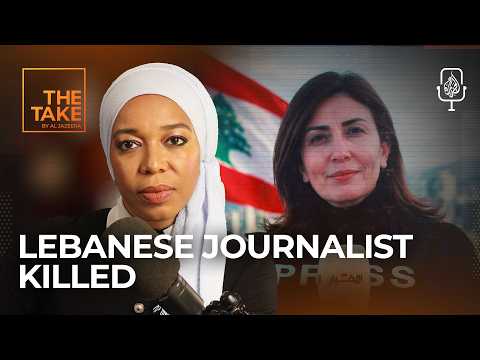
Amal Khalil was killed while reporting on an Israeli air strike in southern Lebanon during a 10-day ceasefire. She is the ninth journalist killed in Lebanon this year. As Lebanon buries her and talks continue on extending the ceasefire, what does her death say about the prospects for accountability?
In this episode:
- Heidi Pett, Al Jazeera Correspondent
Episode credits:
This episode was produced by David Enders and Chloe K. Li with Spencer Cline, Tuleen Barakat, Catherine Nouhan, and our host, Malika Bilal. It was edited by Tamara Khandakar and Noor Wazwaz.
Our sound designer is Alex Roldan. Our video editors are Hisham Abu Salah and Mohannad al-Melhem. Alexandra Locke is The Take’s executive producer.
Amal Khalil was killed while reporting on an Israeli air strike in southern Lebanon during a 10-day ceasefire. She is the ninth journalist killed in Lebanon this year. As Lebanon buries her and talks continue on extending the ceasefire, what does her death say about the prospects for accountability?
In this episode:
- Heidi Pett, Al Jazeera Correspondent
Episode credits:
This episode was produced by David Enders and Chloe K. Li with Spencer Cline, Tuleen Barakat, Catherine Nouhan, and our host, Malika Bilal. It was edited by Tamara Khandakar and Noor Wazwaz.
Our sound designer is Alex Roldan. Our video editors are Hisham Abu Salah and Mohannad al-Melhem. Alexandra Locke is The Take’s executive producer.

 Anmelden