Anmelden
US, Iran locked in a ‘no war, no peace’ endurance test | This Is America

In this episode of This Is America, hosted by Cyril Vanier, Al Jazeera examines how the US-Israel war on Iran has shifted into a “no peace, no war” endurance test – a phase of managed instability where neither side has won on the battlefield, yet both are paying an ever‑rising economic price. Two months after the ceasefire halted the bombing, the Strait of Hormuz remains effectively closed, turning one of the world’s most strategic waterways into the centre of a double blockade and a global shock to energy, fertiliser and trade.
From the White House, chief US Correspondent Alan Fisher unpacks Donald Trump’s gamble: moving from “Operation Epic Fury” in the air to “Operation Economic Fury” at sea, betting that a prolonged naval blockade and lost oil revenue will eventually break Iran’s resistance. Trump now openly frames the conflict as a contest of time and pain tolerance – insisting the US has “plenty of time” to get a “great deal” even as he claims Iran’s military is “totally defeated”.
At the Port of Baltimore, Richard Gaisford shows how a distant standoff in Hormuz is washing up on American shores. He reports on higher shipping costs, more expensive imports and a looming squeeze on farmers facing a global fertiliser shortage so severe that many say they can no longer afford to plant all their crops. From supermarket shelves to plastics and clothing, the closure of Hormuz is feeding through into US inflation, even as the President dismisses “fake inflation” and celebrates record stock market highs. In Iran, Gaisford tracks how the blockade is choking the oil industry at the heart of the country’s economy and forcing households to absorb yet another round of price rises in a long economic war they know well.
John Holman breaks down what it costs Washington to sustain this posture: three carrier strike groups in the region, tens of thousands of troops still in the “theatre of war”, and billions of dollars’ worth of missiles, drones and bombs already expended. He explains why US planners now face a worrying window in which key munitions stocks could take years to rebuild – a vulnerability closely watched by both allies and adversaries from Europe to China.
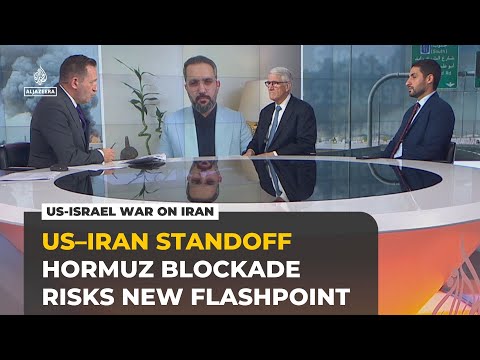
In the studio, former US ambassador and Middle East peace envoy David Hale joins former Pentagon official and CSIS senior adviser Mark Cancian to ask whether this has become a pure waiting game – and if so, who really has the higher pain threshold. They explore whether coercive diplomacy is reaching its limits, what it means for US strategy in other regions, and how long Washington and Tehran can manage a “no war, no peace” stalemate before miscalculation or domestic politics forces a change.
Alex Baird rounds up a heated online debate in which commentators brand the stand‑off a “strategic stalemate” or even a new Cold War, Trump allies urge him to “stick to your guns”, and critics warn the White House is trapped in a geopolitical test of endurance it may not be able to control.
This Is America asks whether the US and Iran are inching towards a deal, drifting into an open‑ended war of attrition, or locking the world into a dangerous new normal where “no peace, no war” becomes the price of power.
Subscribe to our channel: http://bit.ly/AJSubscribe
Follow us on X: https://twitter.com/AJEnglish
Find us on Facebook: https://www.facebook.com/aljazeera
Check our website: http://www.aljazeera.com/
Check out our Instagram page: https://www.instagram.com/aljazeeraenglish/
Download AJE Mobile App: https://aje.news/AJEMobile
#StraitOfHormuz #Iran #US #DonaldTrump #USIranTalks #USIranCeasefire #USIsraelWarOnIran #IranWar #USBlockadeOnIran #HormuzBlockade #USNavalBlockadeOnIran #MiddleEast #OperationEpicFury #ThisIsAmerica #AlJazeeraEnglish
From the White House, chief US Correspondent Alan Fisher unpacks Donald Trump’s gamble: moving from “Operation Epic Fury” in the air to “Operation Economic Fury” at sea, betting that a prolonged naval blockade and lost oil revenue will eventually break Iran’s resistance. Trump now openly frames the conflict as a contest of time and pain tolerance – insisting the US has “plenty of time” to get a “great deal” even as he claims Iran’s military is “totally defeated”.
At the Port of Baltimore, Richard Gaisford shows how a distant standoff in Hormuz is washing up on American shores. He reports on higher shipping costs, more expensive imports and a looming squeeze on farmers facing a global fertiliser shortage so severe that many say they can no longer afford to plant all their crops. From supermarket shelves to plastics and clothing, the closure of Hormuz is feeding through into US inflation, even as the President dismisses “fake inflation” and celebrates record stock market highs. In Iran, Gaisford tracks how the blockade is choking the oil industry at the heart of the country’s economy and forcing households to absorb yet another round of price rises in a long economic war they know well.
John Holman breaks down what it costs Washington to sustain this posture: three carrier strike groups in the region, tens of thousands of troops still in the “theatre of war”, and billions of dollars’ worth of missiles, drones and bombs already expended. He explains why US planners now face a worrying window in which key munitions stocks could take years to rebuild – a vulnerability closely watched by both allies and adversaries from Europe to China.
In the studio, former US ambassador and Middle East peace envoy David Hale joins former Pentagon official and CSIS senior adviser Mark Cancian to ask whether this has become a pure waiting game – and if so, who really has the higher pain threshold. They explore whether coercive diplomacy is reaching its limits, what it means for US strategy in other regions, and how long Washington and Tehran can manage a “no war, no peace” stalemate before miscalculation or domestic politics forces a change.
Alex Baird rounds up a heated online debate in which commentators brand the stand‑off a “strategic stalemate” or even a new Cold War, Trump allies urge him to “stick to your guns”, and critics warn the White House is trapped in a geopolitical test of endurance it may not be able to control.
This Is America asks whether the US and Iran are inching towards a deal, drifting into an open‑ended war of attrition, or locking the world into a dangerous new normal where “no peace, no war” becomes the price of power.
Subscribe to our channel: http://bit.ly/AJSubscribe
Follow us on X: https://twitter.com/AJEnglish
Find us on Facebook: https://www.facebook.com/aljazeera
Check our website: http://www.aljazeera.com/
Check out our Instagram page: https://www.instagram.com/aljazeeraenglish/
Download AJE Mobile App: https://aje.news/AJEMobile
#StraitOfHormuz #Iran #US #DonaldTrump #USIranTalks #USIranCeasefire #USIsraelWarOnIran #IranWar #USBlockadeOnIran #HormuzBlockade #USNavalBlockadeOnIran #MiddleEast #OperationEpicFury #ThisIsAmerica #AlJazeeraEnglish