Anmelden
How the war on Iran became JD Vance’s political liability | This is America

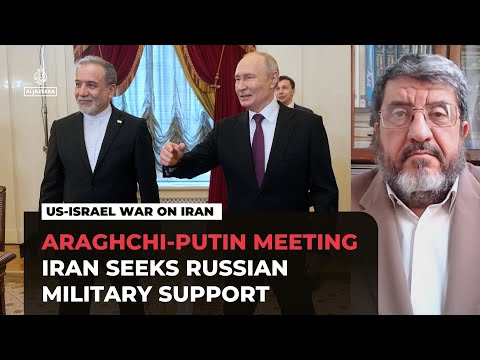
In this episode of This is America, hosted by Cyril Vanier, Al Jazeera examines Donald Trump’s trusted but unconventional team of negotiators and asks whether they are really equipped to deliver peace with Iran. In a city that builds monuments to victory rather than peace, the programme looks at the “angels of peace” Trump has chosen: his son‑in‑law Jared Kushner, real estate tycoon Steve Witkoff, and Vice President JD Vance – a politician who built his brand opposing foreign wars and did not initially support this one.
From the White House, Alan Fisher explains how Trump has repeatedly bypassed professional diplomats, instead sending a tight inner circle into some of the most sensitive talks of his presidency. He tracks their first, 20‑hour round of face‑to‑face negotiations with Iran in Pakistan – the highest‑level US–Iran talks in nearly half a century – and why they ended with no visible progress on a ceasefire, Iran’s nuclear programme, or the Strait of Hormuz. Fisher also unpacks Trump’s last‑minute decision to cancel a follow‑up trip to Islamabad, his insistence that Iran “cannot have a nuclear weapon”, and his belief that a blockade on Iranian oil will force Tehran back to the table on US terms.
Manuel Rapalo profiles the three men Trump has empowered. He contrasts Vance – seen as the anti‑interventionist heir to the MAGA movement and now the public face of a war he opposed – with Kushner and Witkoff, whose backgrounds are in real estate, not nuclear diplomacy. Rapalo lays out their mixed record: Kushner’s role in the Abraham Accords and Gaza ceasefire efforts, Witkoff’s shuttle diplomacy with Vladimir Putin and Volodymyr Zelenskyy, and their joint talks with Iran in Oman and Geneva that were followed by US air strikes, deepening Tehran’s distrust. He shows why Iranian officials quietly signalled a preference for Vance, whom they view as both anti‑war and politically eager to end the conflict quickly.
In the studio, Republican strategist John Feehery and former US ambassador Gordon Gray debate whether trust and direct access to Trump can compensate for limited diplomatic experience. Gray argues that negotiators who lack deep expertise must be backed by strong technical teams, while Feehery stresses that Trump wants loyalists who share his business‑style approach and can sell any eventual deal to a divided American public. Both agree that for Vance, this is the defining foreign‑policy test of his vice‑presidency and possibly his 2028 ambitions: a bad deal hurts him, no deal hurts him, and even a “good” deal may not satisfy either side.
John Holman analyses how US media have responded to the stalled talks, Trump’s Fox News call‑ins and his decision to “do it by telephone” rather than send negotiators back to Pakistan. He highlights headlines warning that Kushner and Witkoff may be “making things worse” and points to the split‑screen optics of Vance announcing failure in Islamabad while Trump watches a UFC fight in Miami.
Alex Baird then tracks the online backlash, from critics saying Kushner and Witkoff are “in way over their heads” to viral posts arguing that Trump’s choice of negotiators signals how serious – or unserious – he is about a deal.
This is America asks whether Trump’s reliance on a loyal, narrow inner circle is a bold challenge to traditional diplomacy or a high‑risk experiment that leaves the Iran peace process – and JD Vance’s political future – hanging on talks that may never deliver the breakthrough both sides claim to want.
Subscribe to our channel: http://bit.ly/AJSubscribe
Follow us on X: https://twitter.com/AJEnglish
Find us on Facebook: https://www.facebook.com/aljazeera
Check our website: http://www.aljazeera.com/
Check out our Instagram page: https://www.instagram.com/aljazeeraenglish/
Download AJE Mobile App: https://aje.news/AJEMobile
#DonaldTrump #JDVance #JaredKushner #SteveWitkoff #US #Iran #USIranTalks #USIranCeasefire #Israel #USIsraelWarOnIran #IranWar #IranConflict #MiddleEast #OperationEpicFury #ThisIsAmerica #AlJazeeraEnglish
From the White House, Alan Fisher explains how Trump has repeatedly bypassed professional diplomats, instead sending a tight inner circle into some of the most sensitive talks of his presidency. He tracks their first, 20‑hour round of face‑to‑face negotiations with Iran in Pakistan – the highest‑level US–Iran talks in nearly half a century – and why they ended with no visible progress on a ceasefire, Iran’s nuclear programme, or the Strait of Hormuz. Fisher also unpacks Trump’s last‑minute decision to cancel a follow‑up trip to Islamabad, his insistence that Iran “cannot have a nuclear weapon”, and his belief that a blockade on Iranian oil will force Tehran back to the table on US terms.
Manuel Rapalo profiles the three men Trump has empowered. He contrasts Vance – seen as the anti‑interventionist heir to the MAGA movement and now the public face of a war he opposed – with Kushner and Witkoff, whose backgrounds are in real estate, not nuclear diplomacy. Rapalo lays out their mixed record: Kushner’s role in the Abraham Accords and Gaza ceasefire efforts, Witkoff’s shuttle diplomacy with Vladimir Putin and Volodymyr Zelenskyy, and their joint talks with Iran in Oman and Geneva that were followed by US air strikes, deepening Tehran’s distrust. He shows why Iranian officials quietly signalled a preference for Vance, whom they view as both anti‑war and politically eager to end the conflict quickly.
In the studio, Republican strategist John Feehery and former US ambassador Gordon Gray debate whether trust and direct access to Trump can compensate for limited diplomatic experience. Gray argues that negotiators who lack deep expertise must be backed by strong technical teams, while Feehery stresses that Trump wants loyalists who share his business‑style approach and can sell any eventual deal to a divided American public. Both agree that for Vance, this is the defining foreign‑policy test of his vice‑presidency and possibly his 2028 ambitions: a bad deal hurts him, no deal hurts him, and even a “good” deal may not satisfy either side.
John Holman analyses how US media have responded to the stalled talks, Trump’s Fox News call‑ins and his decision to “do it by telephone” rather than send negotiators back to Pakistan. He highlights headlines warning that Kushner and Witkoff may be “making things worse” and points to the split‑screen optics of Vance announcing failure in Islamabad while Trump watches a UFC fight in Miami.
Alex Baird then tracks the online backlash, from critics saying Kushner and Witkoff are “in way over their heads” to viral posts arguing that Trump’s choice of negotiators signals how serious – or unserious – he is about a deal.
This is America asks whether Trump’s reliance on a loyal, narrow inner circle is a bold challenge to traditional diplomacy or a high‑risk experiment that leaves the Iran peace process – and JD Vance’s political future – hanging on talks that may never deliver the breakthrough both sides claim to want.
Subscribe to our channel: http://bit.ly/AJSubscribe
Follow us on X: https://twitter.com/AJEnglish
Find us on Facebook: https://www.facebook.com/aljazeera
Check our website: http://www.aljazeera.com/
Check out our Instagram page: https://www.instagram.com/aljazeeraenglish/
Download AJE Mobile App: https://aje.news/AJEMobile
#DonaldTrump #JDVance #JaredKushner #SteveWitkoff #US #Iran #USIranTalks #USIranCeasefire #Israel #USIsraelWarOnIran #IranWar #IranConflict #MiddleEast #OperationEpicFury #ThisIsAmerica #AlJazeeraEnglish